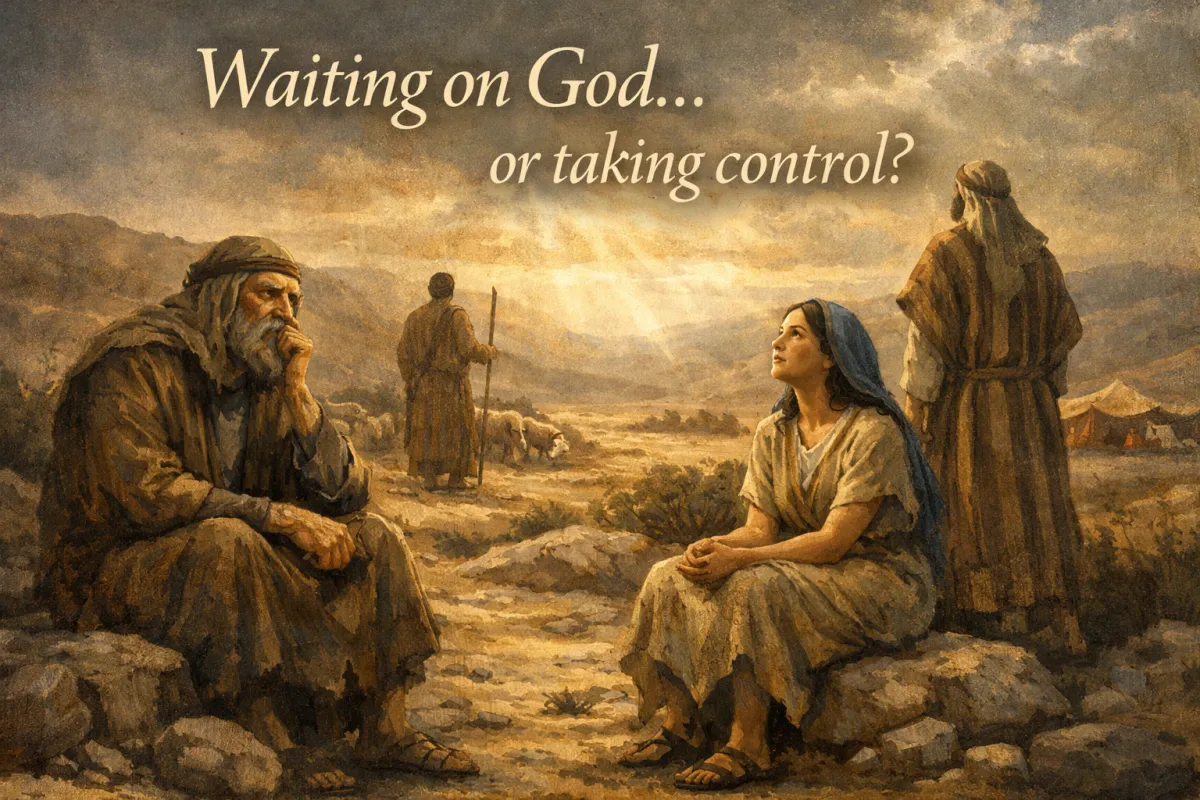
Waiting on God
God’s Timing, Our Waiting — And Why This Has Never Been Easy
I keep coming back to this question, and I suspect I’m not the only one:
How are we supposed to wait for God when life doesn’t pause while we do?
We hear “wait on the Lord” spoken so gently, almost like it should be simple. But when you look closer—really look—waiting has never been easy for anyone in the Bible, either. Not then. Not now.
So I started asking the questions that usually stay unspoken.
Did people in biblical times just live so long that waiting didn’t matter as much?
That’s often the assumption. When we hear that some people lived hundreds of years, it’s tempting to think waiting decades wasn’t a big deal. But that idea falls apart pretty quickly when you read their stories. Waiting still came with fear, uncertainty, and risk. Even a ten-year delay could feel unbearable when the future felt fragile or threatened.
And as time went on, lifespans shortened. By the time we reach familiar biblical figures, people were living lives much closer to what we know today. Waiting wasn’t some luxury afforded by long life—it was a test of trust, and it was costly.
Did waiting mean they did nothing?
This is another misunderstanding I had to unlearn. Waiting in the Bible rarely looks like sitting still. People worked, traveled, raised families, led nations, and made daily decisions. Waiting wasn’t inactivity—it was restraint. It was choosing not to force outcomes out of fear. It was moving forward without taking control away from God.
Waiting was less about stopping life and more about resisting panic.
What if waiting felt too risky?
This is where the stories start to feel uncomfortably familiar. What if waiting meant losing security? What if the promise felt too slow? What if doing nothing felt more dangerous than doing something—even if it meant stepping ahead of God?
That’s when people acted. Not because they were rebellious, but because they were anxious. And again and again, Scripture shows what happens when fear replaces trust. The results were rarely small. Choices made to “help God along” often created consequences that stretched far beyond the moment.
So is waiting for God really possible in every situation?
I don’t think Scripture teaches blind, endless waiting with no discernment. Waiting doesn’t mean ignoring responsibility or refusing to act when action is required. What it does mean is refusing to act from fear. It means not replacing God simply because silence feels unbearable.
Sometimes waiting ends because God moves. Sometimes it ends because clarity comes. And sometimes the waiting itself is shaping something we can’t see yet.
Why does God’s timing feel so slow?
I’ve come to believe it’s because God’s timeline isn’t built around our urgency. It’s built around preparation. Often the delay isn’t about circumstances catching up—it’s about hearts, motives, and trust being refined. That doesn’t make the waiting comfortable, but it gives it purpose.
What’s the real danger—waiting too long, or acting too soon?
Scripture seems clear on this one. Acting too soon, especially out of fear, tends to leave a trail behind it. Waiting may feel painful, but rushing often creates damage that can’t be undone. The Bible doesn’t hide those stories. It records them plainly, almost as a warning for the rest of us.
I don’t think the message is that waiting is easy. It never has been.
The message is that trust has always been harder than control.
Maybe the better question isn’t, “Why is God taking so long?”
Maybe it’s, “What am I afraid will happen if I don’t take over?”
That question alone has a way of exposing whether we’re truly waiting on God—or quietly trying to replace Him.
